Evidence-Driven Policy: Appropriators Review Student Literacy Outcomes
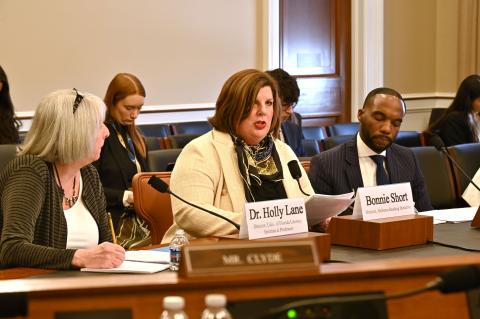
Washington, D.C. – Today, the Labor, Health and Human Services, Education, and Related Agencies Subcommittee, chaired by Rep. Robert Aderholt (R-AL), held a hearing on childhood literacy and the reading skills foundational to lifelong success for America’s next generation. Members received testimony and asked questions on research-based approaches to instruction, including Science of Reading strategies, which emphasize phonics and high-quality coursework shown to improve achievement and literacy outcomes among the nation’s youth.
The witnesses included:
- Dr. Holly Lane, Director and Professor, University of Florida Literacy Institute
- Mrs. Bonnie Short, Director, Alabama Reading Initiative
- Mr. Larry Saulsberry, Director, Teaching and Learning for Literacy, Huntsville City Schools
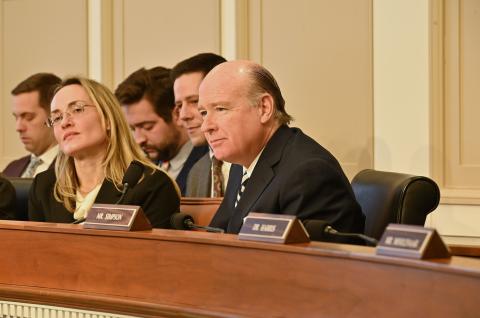
Labor, Health and Human Services, Education, and Related Agencies Subcommittee Chairman Robert Aderholt (R-AL) said, "Developing strong reading skills at an early age is a foundational building block for lifelong success. When students master basic reading skills by the fourth grade, they make the important transition from 'learning to read' to 'reading to learn.' That is why these early years are so crucial, and why we owe it to our children to provide them with proven, effective instruction in reading."
Read the rest of Chairman Aderholt's opening remarks here.
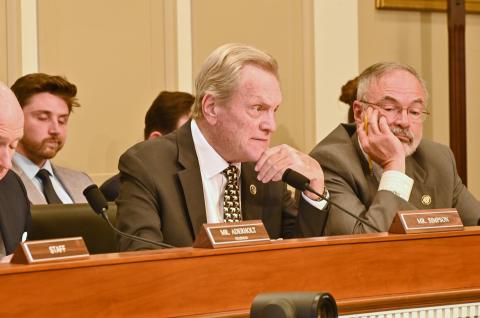
Rep. Mike Simpson (R-ID) recalled an experience he had in the Idaho state legislature, working with a friend who taught reading recovery. Rep. Simpson said, "She told me a couple of things. One of them is that if a child doesn't get on grade level by about the third grade, they're just going to get further and further behind, and you've essentially lost that child... Second thing she taught me was you have to get the parents involved."
In response, Dr. Lane talked about the lack of teacher resources available to properly teach reading in the classroom, as well as the issue of outdated and unstudied resources being the only options available for many schools. She also said that there are connections between students with literacy issues and parents with literacy issues themselves. Supporting parent and family literacy efforts could help students to have a literacy-rich environment.
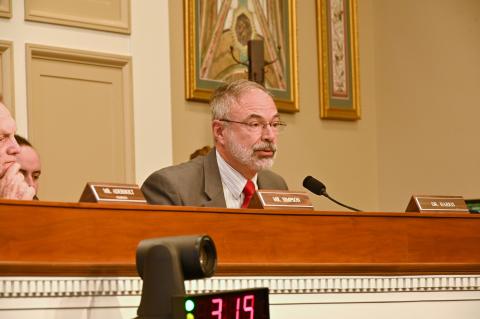
Rep. Andy Harris (R-MD) shared information from an investigative journalist in the book Failure Factory, about how the Baltimore high school that once educated Thurgood Marshall, the first African American Supreme Court Justice, has a 0% reading proficiency rate today. Rep. Harris said, "You all know about the million-word gap. If you're read to as a child, you're likely not to have the million-word gap. And if you come out of a single-parent household, you're more likely not to succeed in reading and literacy... Maybe we need a 'Make America Read Again' policy or something... We know the data: 69% of black children are born to a single-[parent] household, 52% of Hispanics, 28% of white children. Our single-parent household rate is three times as high as the rest of the world. Our reading is worse than the rest of the world. We should be looking at every single policy we have, and make sure we promote a household that will support literacy."
Mr. Saulsberry replied that family structure is very important for child literacy, and recalled a school that has a home literacy program encouraging students to bring books home. Similar programs, trips to libraries, and any kind of incentive to get kids interested in reading are beneficial.
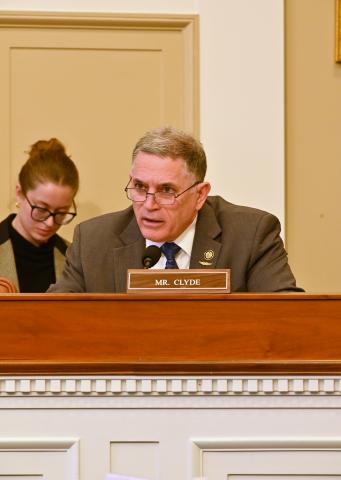
Rep. Andrew Clyde (R-GA) brought up the stark difference in test scores compared to the increase in education spending in recent decades. Rep. Clyde said, "I think education should be done at the lowest level possible, the closest to parents and students. Today, we face a national crisis in reading proficiency. However, federal costs on education have only skyrocketed since the 1960s. U.S. taxpayers have spent nearly $3 trillion on education in public schools, yet test scores have failed to meaningfully improve, with only about one-third of our fourth and eighth-graders reading at proficient levels, according to the latest national assessment of education progress data. This isn't just an education failure. It's a threat to America's self-reliance, its future workforce, and its global competitiveness."
Dr. Lane shared information on numerous studies that have been done over the years to test the best ways to increase literacy – and, despite very clear results, effective programs have been ignored for years because of political pressures in favor of more "faddish" teaching styles. In reality, the new, big thing isn't usually the most effective.
Improving student outcomes reflects a long-term investment in the nation’s future and remains a priority for House Republicans. As the House Appropriations Committee moves into the FY27 funding process, the perspectives shared during this hearing will help shape funding decisions. Stronger classrooms, innovative and effective reforms, and education that delivers real results for our youth remain central to this work.
###
