ICYMI: House Appropriators Examine Security Threats and Religious Persecution in Nigeria
Washington, D.C – Following President Trump’s call-to-action and redesignation of Nigeria as a Country of Particular Concern (CPC), House Appropriations Committee Vice Chair and National Security, Department of State, and Related Programs Subcommittee Chairman Mario Díaz-Balart (R-FL) recently led a bipartisan delegation to Nigeria for an on-the-ground fact-finding mission to examine alarming anti-Christian violence and religious persecution. Members of the Committee – including Republican Representatives Scott Franklin (R-FL), Juan Ciscomani (R-AZ), and Riley Moore (R-WV) – heard directly from Nigerian victims of violence, the government, and from faith and local organizations, which informed the formation of congressional recommendations to the White House. These recommendations will focus on protecting innocent lives, supporting security and economic stability, safeguarding religious liberty, and destroying jihadist terrorist networks.
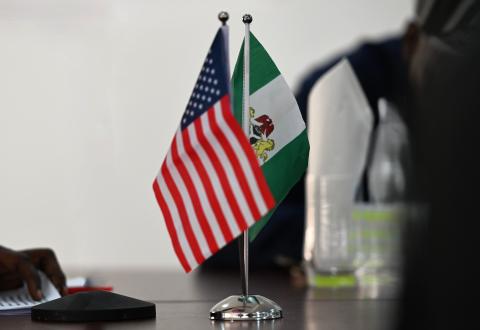
U.S. Ambassador Country Briefing: The delegation received a country team briefing from the U.S. Embassy in Nigeria, which included an overview of the escalating religious violence and threats in the Middle Belt. The U.S. embassy noted how President Trump’s recent impactful designation of Nigeria as a Country of Particular Concern has renewed attention and created urgency to press the Nigerian government to take tangible steps to reduce violence, especially threats and attacks against Christians, and better safeguard religious freedom; address insecurity and improve the recruitment and deployment of trained police; enhance counterterrorism efforts and security operations targeting radical Islamic terrorist groups, a crucial component to U.S. security; and further enhance the U.S.-Nigerian partnership on security, diplomatic, and economic issues.
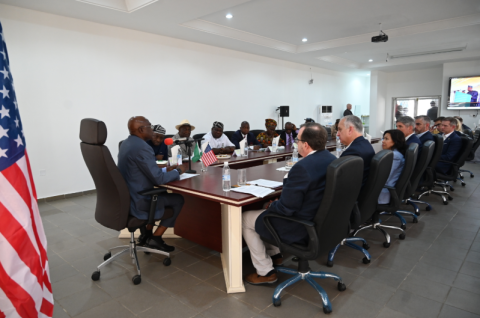
Governor of Benue State: Members traveled to Benue State, in the Middle Belt region of Nigeria, where Christians are vulnerable to record-breaking violence and killings, leading to a surge in the number of internally displaced people (IDP) – those who’ve been forced to flee their homes by conflict, violence, persecution, or disasters. There, they met with Reverend Father Dr. Hyacinth Alia, Governor of Benue State, and local officials to discuss the escalating attacks against Christians. The lawmakers expressed deep concern with the numerous mass casualty events, the rising threats against Christians and farming communities, and the increasing displacement of people from their homes. Members discussed their ideas to curb violence and hold perpetrators accountable, including early warning systems, improved prosecutorial capacities, and security sector reforms. The group also heard how ongoing instability has opened the door to hostile foreign exploitation. Chinese Communist Party (CCP)-backed mining networks – aided by local collaborators and armed terrorists – are violently clearing Christian farming communities and villages to steal oil and rare earth minerals. Terror is fueling predatory extraction that enriches the CCP while everyday Nigerians suffer.
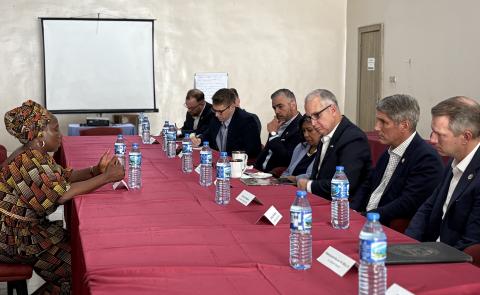
Director General of the Benue State Commission for Peace and Reconciliation: Benue State remains the most dangerous state in which to be a Christian. Rampant attacks have deprived thousands of people of their rights to life, religious liberty, and the pursuit of livelihoods. In a session with Josephine Habba, the Director General of the Benue State Commission for Peace and Reconciliation, Members learned about efforts to build bridges among community members, government, and security forces, and prevent conflict. Members directed further discussion on how the United States can help Nigeria build the capacity to stop violence specifically targeting Christian communities and ensure perpetrators are held accountable. The government’s accountability failures and poor response to communities facing rising violence have eroded public trust as well as emboldened even more attacks. The resulting humanitarian fallout has driven the displacement of more than 500,000 people since 2024 alone, with families pushed into overcrowded, under-resourced IDP camps.
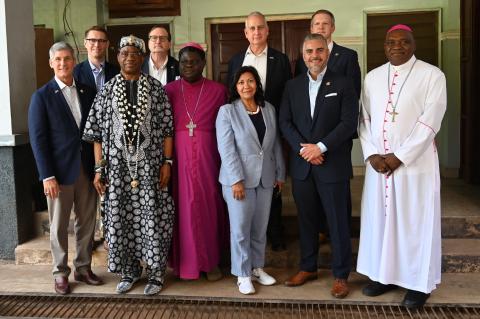
Bishop Wilfred Anagbe, Bishop Isaac Dugu, and His Royal Highness James Ayatse: Bishop Wilfred Anagbe, Bishop Isaac Dugu, and His Royal Highness James Ayatse reiterated what the violence and massacres have shown: Nigeria is the most dangerous nation on Earth to follow Christ. For simply practicing their faith, Christians are kidnapped, attacked, and slaughtered. These religious leaders underscored how Fulani militants lead killings against Christians. They target churches, clergy, children and families, religious minorities, and land resources. The Fulani militants drive innocent people out of their homes and villages, and they surveil these areas – attacking anyone who dares come back and committing untold atrocities. Fulani militant and bandit groups are seizing land and resources and obstructing religious freedom to exert control and coerce conversion to Islam. Fulani militants have destroyed entire communities and displaced thousands, sowing fear and terror among Christians in the Middle Belt. The consensus remains that government has failed to confront both the scale and the intent of these atrocities.
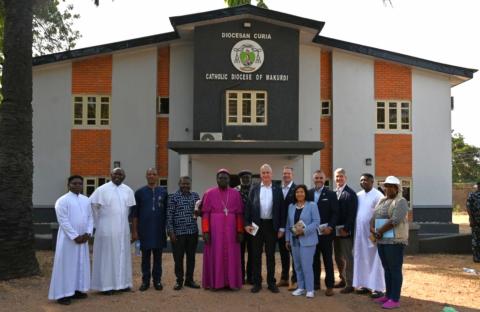
Faith Leaders Roundtable: Bishop Anagbe also assembled faith leaders and academics from across Benue State to offer candid, firsthand perspectives on current conditions. Participants underscored the most meaningful changes in years have come from President Trump’s CPC announcement. The designation renewed the Nigerian government’s attention and generated meaningful political will to take action. They emphasized the White House’s action came at a critical time. Participants affirmed U.S. attention is critical to reaching a durable end to the violence to secure the lives and livelihoods of the Nigerian people. Nigerians emphasized they want sustained American diplomatic pressure to encourage their government to act to stop deliberate killings and kidnappings, confront jihadist threats from ISIS-WA and Boko Haram, and ensure displaced people can safely return to their homes and worship freely. The congressional delegation emphasized that religious freedom and liberty are core American values and reaffirmed the importance of strengthening security coordination to dismantle radical extremist groups such as ISIS-WA and Boko Haram. Members stressed that confronting these threats is essential not only to Nigeria’s stability, but to the regional security of West Africa and the safety of the U.S. homeland. The delegation also noted that the United States maintains a trade surplus with Nigeria, and that greater stability would further expand economic ties and shared prosperity.
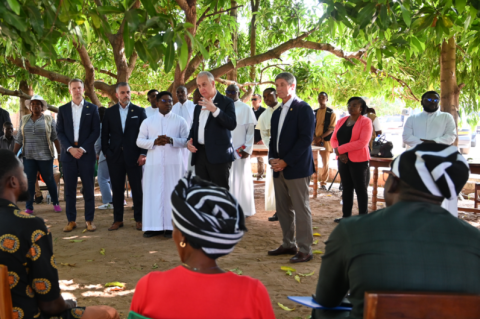
Victims of Violence, Internally Displaced People: In what was the most heart-wrenching and emotional visit of the trip, victims of the violence shared their harrowing stories. One woman was forced to watch as her husband and five children were killed. As she spoke, she held the baby she was carrying when she fled and miraculously survived. Tragically, stories of massacred families and murdered children are not isolated incidents. Survivor after survivor recounted similar experiences, bearing both visible wounds and deep trauma. Forced from their homes, they now live in overcrowded IDP camps. The fear of generational eradication is real, and the loss of ancestral villages and homes represents the deliberate unraveling of families, faith, and future generations. Defending religious liberty worldwide is both a moral duty and a vital American interest. The Members emphasized that humanity guided this trip, informed the Trump Administration’s actions, and will remain at the core of the recommendations that follow.
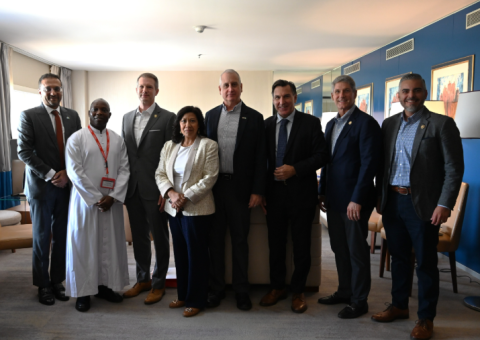
Humanitarian Relief, Crisis Response: Religious persecution and violence in Nigeria are fueling a severe humanitarian crisis. The Members met with UNHCR, Caritas, and World Food Program personnel to discuss mounting displacement and rapidly escalating humanitarian needs. Insecurity across the country is decimating productivity and destroying livelihoods – villages are empty, Fulani militants are seizing farmland, and the government’s failure to protect its people has eroded public trust. While humanitarian assistance and targeted interventions are saving lives, IDP camps are increasingly permanent settlements rather than temporary refuge. The broad consensus is that the Nigerian government must do more to confront the drivers of violence, restore security, and ensure displaced families can safely return home and rebuild their lives. Participants underscored the generosity of the United States and emphasized that President Trump’s CPC designation elevated international attention, applied meaningful pressure, and catalyzed overdue action by Nigerian authorities.
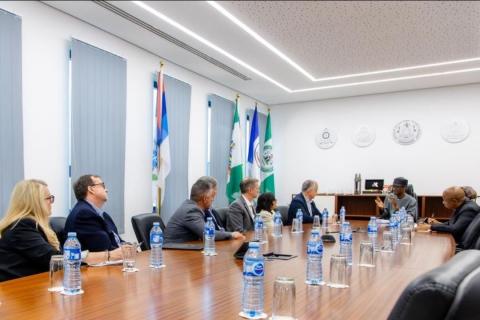
National Security Advisor: Radical Islamic terrorist organizations such as ISIS-West Africa, Boko Haram, and Fulani militant groups are driving instability and violence across Nigeria. Their activities threaten civilian populations, suppress religious freedom, and sustain extremist networks that pose broader regional and U.S. security risks. Nigerian National Security Advisor Nuhu Ribadu stressed that added action to protect vulnerable Christians and communities is a priority. President Trump’s CPC designation spurred concrete government action, including President Bola Tinubu’s declaration of a nationwide security emergency, the planned recruitment of 50,000 additional police officers, and the reassignment of officers from VIP protection to frontline duties to strengthen on-the-ground capabilities. The United States is also providing Nigerian forces with intelligence, surveillance, and reconnaissance support to counter insurgent and terrorist threats. Addressing the horrific and escalating violence against Christians and vulnerable communities in Nigeria will support stability in the region and counter violent extremism, a threat to Nigeria and the United States.

This fact-finding mission builds on sustained oversight by the House Appropriations Committee and reinforces a clear conclusion: defending humanity, protecting religious freedom, and confronting violent extremism are inseparable from U.S. national security interests. The delegation’s findings will inform a formal set of recommendations to the White House focused on strengthening the U.S.–Nigerian partnership in ways that deliver greater security and stability, safeguard freedom and religious liberty, promote economic growth, and dismantle terrorist networks.
While returning to the United States, Members learned that 100 kidnapped girls had been released – an encouraging development that highlights both the human stakes of this crisis and the impact of enduring American engagement and leadership. Furthermore, the mission underscored the urgent need to enact full-year funding bills to restore responsive and good governance and appropriately address these emergent national security crises. Appropriators will ensure the FY26 bill reinforces President Trump’s Country of Particular Concern designation, prioritizes religious freedom and atrocity response initiatives, and advances core national security priorities.
###
