Oversight in Action: Appropriations Convenes First Hearing of the Year
Washington, D.C. – This week, the House Appropriations Committee convened its first hearing of the year, with Agriculture, Rural Development, Food and Drug Administration, and Related Agencies Subcommittee Chairman Andy Harris (R-MD) and members receiving testimony from the U.S. Department of Agriculture’s (USDA) Office of Inspector General (OIG) on efforts to support the Trump Administration’s priority of rooting out waste, fraud, and abuse. The proceeding highlighted issues with fraudulent and improper payments, national security concerns, including the smuggling of biological hazards and illicit agricultural products, the buying of farmland by China, and vulnerabilities in agricultural data and research labs.
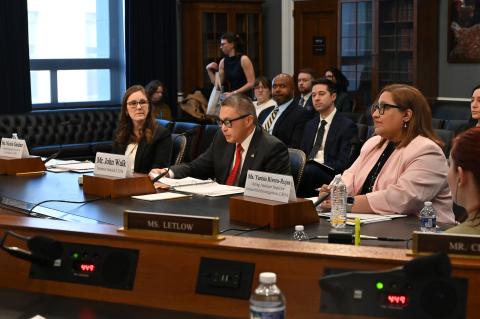
The witnesses included:
- Mr. John Walk, Inspector General, U.S. Department of Agriculture
- Ms. Nicole Gardner, Associate Inspector General for Investigations, U.S. Department of Agriculture
- Ms. Yarisis Rivera-Rojas, Acting Assistant Inspector General for Audit, U.S. Department of Agriculture
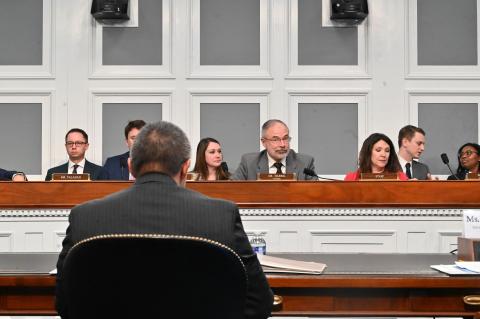
Agriculture, Rural Development, Food and Drug Administration, and Related Agencies Subcommittee Chair Andy Harris (R-MD) opened the hearing with an emphasis on rooting out waste, fraud, and abuse at USDA, a top priority for President Trump and House Republicans. Chairman Harris said, "This Administration has made it a top priority to root out waste, fraud, and abuse across the entire federal government, and OIG plays a critical role in these efforts... If states are found to be willfully neglecting their duty to address SNAP payment errors, they must be held accountable."
Read Subcommittee Chairman Harris' remarks here.
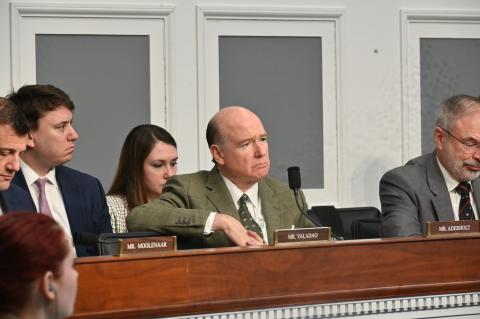
Rep. Robert Aderholt (R-AL) listens in while the panelists give their opening remarks, highlighting the work the OIG is doing to combat fraud and ensure that USDA is working for the American people and that President Trump's policies are being properly implemented.
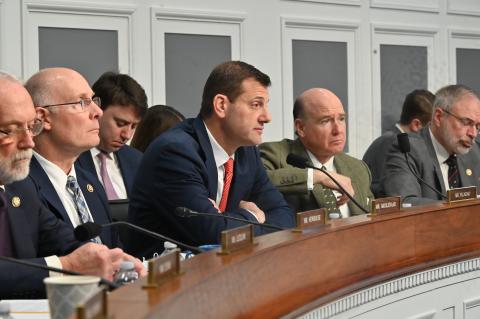
Rep. David Valadao (R-CA) questioned the OIG on its work to investigate improper payments. Rep. Valadao said, "The farm service agencies' emergency conservation program plays a critical role in restoring farmland affected by natural disasters and is essential that these funds are properly administered so producers can continue feeding our communities. Recently, [the OIG] found that the program had an improper payment rate of over 45% in 2024 and recommended that the USDA and FSA update policies and procedures to identify the root causes of these inaccuracies. To your knowledge, has any progress been made in addressing these issues and ensuring these funds are awarded properly?"
Ms. Rivera-Rojas assured the subcommittee that improper payments are a high priority for the OIG, and they continue to work with USDA to lower the rate of improper payments.
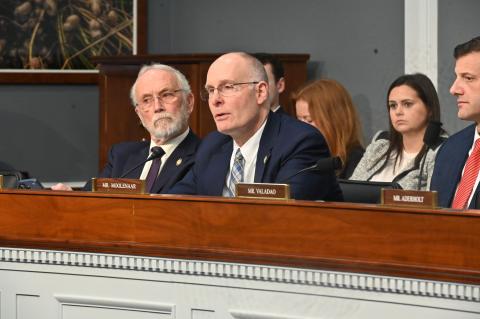
Rep. John Moolenaar (R-MI) asked panelists about the national security threat posed by Chinese nationals in our agricultural sector. Rep. Moolenaar said, "Your office is investigating instances of biological hazards being smuggled into the United States. Two Chinese students, researchers, were caught doing so in my home state of Michigan. I'm wondering if you could comment on what resources that law enforcement [and] the department need to fully ensure that Chinese-backed biological smuggling rings are stopped at the border, and don't put our farmland at risk... When [Secretary Rollins] released the national farm security action plan, [she] talked about foreign adversaries purchasing farmland. Can you comment on those policies and how those are being implemented by the department?"
Mr. Walk responded that multiple law enforcement agencies are working in collaboration with USDA to combat biohazard threats, and that there is ongoing work to learn how to effectively enforce policies surrounding the sale of farmland to foreign nationals.
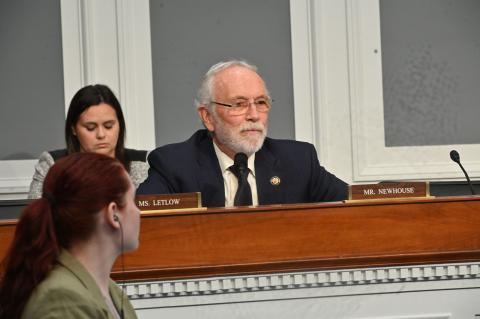
Rep. Dan Newhouse (R-WA) also brought up the topic of food safety. Rep. Newhouse said, "I have concerns that this could be a more detrimental issue, given the ongoing outbreaks of HPAI, the highly pathogenic avian influenza, and the new world screwworm is also a particular problem. Could you tell us your insights into plans or operations around investigating and identifying fraudulent imports that are coming into this country?"
Mr. Walk told the subcommittee that USDA is working to form partnerships with the right agencies to ensure their involvement in investigations into biohazard outbreaks.
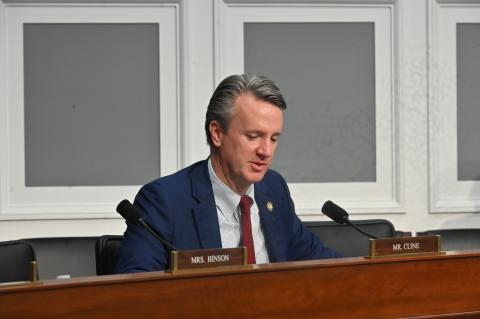
Rep. Ben Cline (R-VA) spoke on the topic of rural broadband, highlighting the importance of helping rural communities get access to the internet. Rep. Cline said, "Another important issue for my district: broadband. Access to broadband, as it is everywhere else in the country, is essential for the prosperity of rural communities. Not only is it important for the ag community, it also enables modern and efficient communication between homes, schools, and health care centers. Despite our ever-growing reliance on technology, however, 22% of Americans in rural areas lack coverage from broadband. Rural areas are slow to keep up. Additionally, nearly 60% of U.S. farmers and ranchers do not believe they have adequate internet connectivity to run their businesses. So, how effectively does USDA verify that broadband funds go to truly unserved areas – not underserved, unserved, and not duplicate existing service or other federal broadband awards?"
Mr. Walk and Ms. Rivera-Rojas reiterated USDA's work to improve access to broadband and assured the subcommittee that they are performing audits on broadband programs.
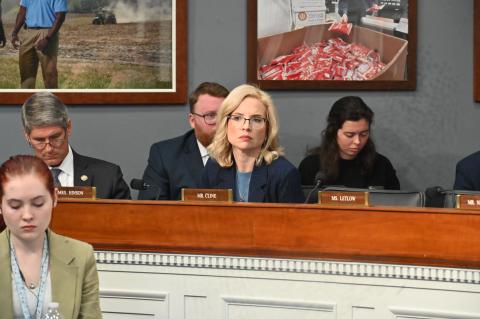
Rep. Ashley Hinson (R-IA) spoke on the topic of SNAP fraud and the skimming of benefits by criminal gangs. Rep. Hinson said, "The stealing of SNAP benefits has definitely been on the rise, especially as those benefit levels increased a lot during COVID and because of the previous administration's actions in not following through on accountability there. And we know that recent estimates show [SNAP stealing] could be in the neighborhood of about $12 billion per year... And I heard you talk a little bit about the technology changes that might need to be made, but can you tell us a little bit more about your role in tackling this issue specifically, and how we might be able to work with your office and with those at the USDA to make sure that we are protecting these precious resources for families who need them."
Mr. Walk told the subcommittee that investigating SNAP fraud is one of his top priorities and that roughly 50% of the OIG's investigative cases are related to SNAP fraud. He said much of the skimming issue is related to criminal gangs – oftentimes international gangs – and that they are working with the U.S. Secret Service on these investigations.

Subcommittee Vice Chair Scott Franklin (R-FL) also brought up national security concerns, with a focus on protecting our supply chains. Rep. Franklin said, "We have a tremendous amount of data from farmers that's being shared specifically with China through the purchase of Chinese acquisitions of U.S. companies... From your perspective, how vulnerable is the U.S. food supply chain and the broader ag sector to malign foreign interference? And how is USDA currently detecting and responding to that national security threat?"
Mr. Walk agreed with Rep. Franklin on the importance of protecting American farmers' data, saying that with new technologies coming out, and much of the tech equipment being made in China, there's still a lot of work to be done to combat the threat of Chinese exploitation.
As appropriators begin work on FY27 funding, the testimony gathered during this hearing will help shape legislation that strengthens America's food supply, empowers our farmers and ranchers, and helps our most vulnerable Americans access the resources they need.
###
