Advancing American Interests: Appropriators Examine U.S. Investment, Trade, and Global Competition
Washington, D.C. – This week, National Security, Department of State, and Related Programs Subcommittee Chairman Mario Díaz-Balart (R-FL) and NSRP Appropriators conducted a budget hearing entitled "Trade and Investment Agencies." Members discussed the important efforts by the agencies to further strengthen the economic and strategic position of the United States around the world – while ensuring accountability, measurable returns, anti-corruption safeguards, and coordination across agencies.
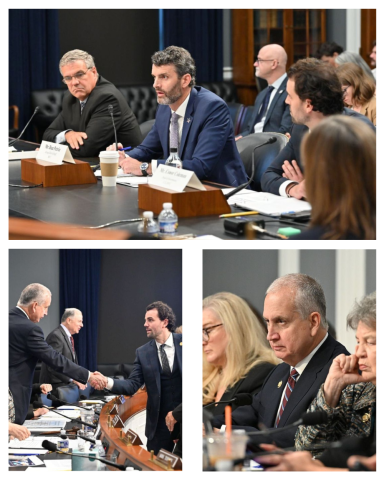
Read on for highlights from the hearing:
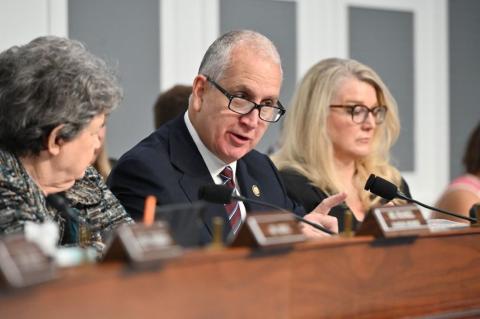
National Security, Department of State, and Related Programs Subcommittee Chairman Mario Díaz-Balart (R-FL) said, "With a $30 trillion economy accounting for 26% of global GDP – up from 24% in 2021 – the United States remains the largest, most innovative, and resilient country in the world. Advancing the security and prosperity of Americans is fundamental to United States foreign policy and drives the funding priorities of this subcommittee. President Trump and Secretary Rubio have made strengthening the economic security of Americans and advancing U.S. commercial interests overseas a top foreign policy priority. In that regard, this subcommittee strongly supports the important efforts by your agencies to further strengthen the economic and strategic position of the United States around the world, such as in the Western Hemisphere and the Indo-Pacific."
Full remarks as prepared for delivery are available here.
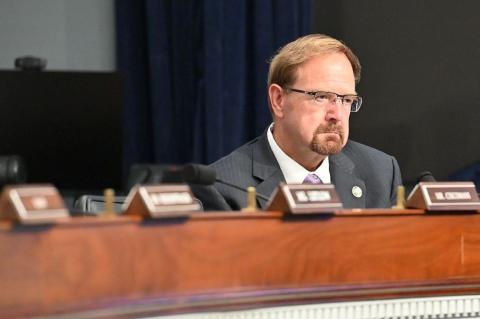
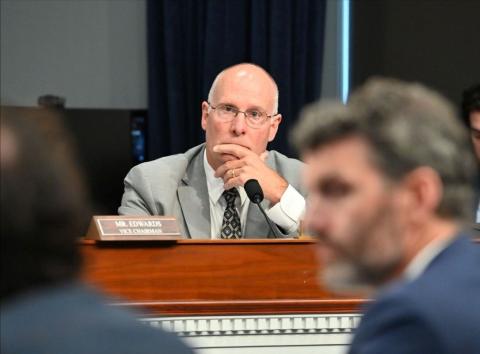
National Security, Department of State, and Related Programs Subcommittee Vice Chair Chuck Edwards (R-NC) said, "I've had an opportunity to travel to many countries with this Committee and others. One of the largest criticisms that I hear of China is that they tend to go in and make easy deals with countries in a form of what I would consider loan sharking, and then at some point begin to extort those countries – in a way – to become more aligned with China than with the United States. Is there anything you can advise Congress to do to prevent that type of behavior?"
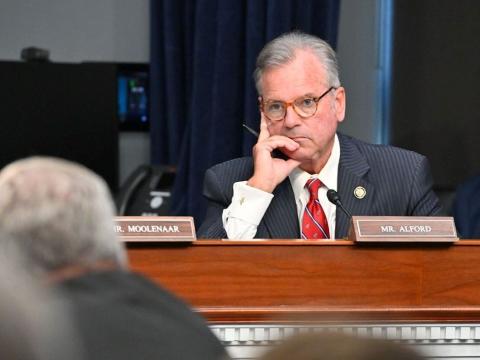
Rep. Mark Alford (R-MO) said, "The agencies before us today stood at the intersection of our economic security and national security, and the decisions that you make help determine whether American companies can compete around the world, or whether Communist China and other strategic competitors are allowed to dominate critical minerals, infrastructure, energy, and other industries that are so vital to our future. I believe every taxpayer dollar we spend overseas must advance a clear American interest. It should support American workers and businesses, strengthen trusted partners, secure our supply chains, and reduce our dependence on foreign adversaries. These programs cannot simply spend money for the sake of spending money. We must – and we need – to target investments, measure results, and have accountability to the American taxpayers. Mr. Hardy, current law generally limits USTDA to developing and middle-income countries, but our competition with China does not stop at an arbitrary income threshold. There are strategically important markets where critical minerals, energy, infrastructure, and emerging technologies have direct implications for U.S. national security. Are USTDA's current eligibility rules keeping us on the sidelines of projects where China is aggressively competing?"
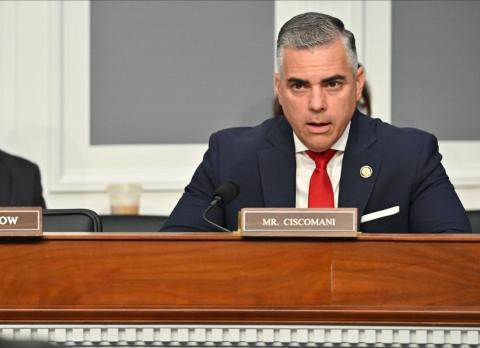
Rep. Juan Ciscomani (R-AZ) said, "This hearing is an excellent opportunity to highlight the aid strategy this administration has put in place – one that puts taxpayers first, U.S. workers, and U.S. strategic interests – while making sure also that every dollar we spend abroad is actually making our country stronger and more secure. As we look at these agencies' budgets, I want to make sure that we're holding the line on accountability to taxpayers, while also ensuring America continues to lead on the global stage. I think that's an important balance to keep... The USTDA funded a feasibility study to expand copper and cobalt production in Zambia. Your critical minerals strategy is aimed at national security and countering China, which is very important. Now, Arizona is the country's leading copper producer – that's my home state – and the cornerstone of U.S. critical minerals capacity. Given this – I have just a few questions here – does USTDA analyze how new foreign copper and cobalt supply might affect U.S. domestic producers, including Arizona's copper industry, on price, market share, or investment competitiveness?"
Rep. John Moolenaar (R-MI) said, "We think a lot about countering China's global influence. I wonder if you could talk about where the DFC believes additional American dollars have the greatest strategic impact: Indo-Pacific, Africa, Latin America, Central Asia. How would you evaluate that?... I wonder if you could talk a little bit about safeguards so that we are using taxpayer dollars to – not inadvertently – strengthen Chinese entities. I wonder if you could also talk a little bit about the Lobito Corridor and how we're evaluating investments there."
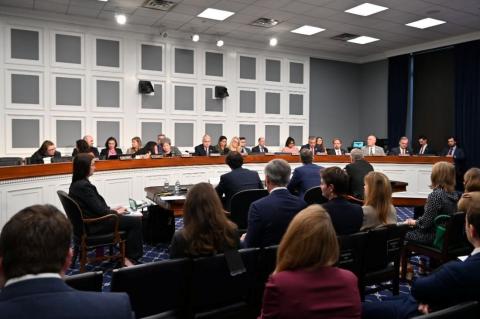
Appropriators reinforced their commitment to ensuring investments are used responsibly to advance U.S. economic and national security interests, strengthen supply chains, support American businesses, and provide alternatives to Chinese investments.
###
