The Blarney Breakdown: America’s Two Pots of Gold
Washington, D.C. – There may be three leaves on a shamrock, but in the U.S. budget, there are just two pots of gold. So, this St. Patrick’s Day, we’re giving you the blarney breakdown – because following the green matters, and only discretionary spending is debated, marked up, and passed through the House Appropriations Committee.
We won’t fiddle you around. When it comes to spending and deficits, it often sounds like one giant treasure chest. It isn’t.
There are two very different buckets of coin to follow.
Pot One: Mandatory Spending + Net Interest
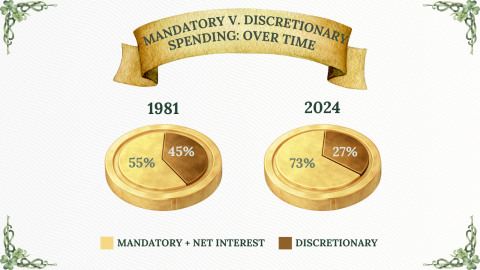
Mandatory spending is governed by permanent law. That means programs like Social Security, Medicare, and Medicaid continue automatically each year unless Congress changes the underlying statute. They are not determined through the annual appropriations process. Net interest on the national debt also falls into this category. As debt grows, interest payments rise – regardless of annual funding decisions. Together, mandatory spending and net interest account for nearly three-quarters of federal outlay. These are the largest drivers of federal spending and long-term fiscal pressures.
Pot Two: Discretionary Spending
Discretionary spending is the portion Congress writes each year through 12 appropriations bills. It funds national defense, border security, veterans’ care, disaster response, infrastructure, and public health. This is the spending often at the center of headlines and shutdown threats. It is debated publicly. It is amended. It is reduced. It is overseen. Over the past two years, House Republicans have made hard decisions – initiating double-digit reductions in multiple subcommittee bills, cutting bloated programs, rooting out waste, and directing resources toward core national priorities. Through our FY26 bills, enacted by President Trump, we ended pork-laden omnibuses, lowered the topline, and restored discipline to the process. But even if discretionary spending were eliminated entirely, the debt would continue to grow. That is the structural reality.
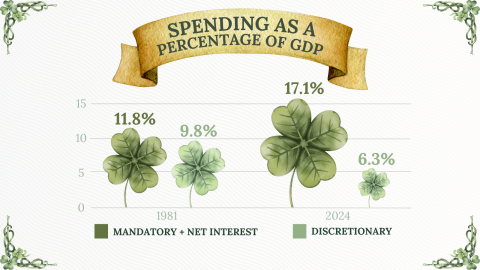
Over time, the discretionary share of the budget has shrunk – from nearly half of federal outlays in 1981 to just 27 percent today. At the same time, mandatory spending and interest have grown to consume nearly three-quarters of the ledger.
Put simply: The spending the committee argues about each year is shrinking, while the bills that run automatically are taking up more and more of the checkbook.
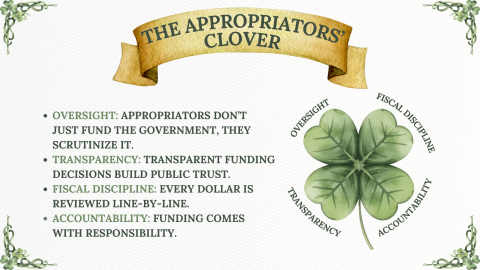
In leprechaun terms: You can trim the clover. But the roots lie elsewhere.
This is not a revenue shortfall. Federal revenues have reached historic highs in recent years, yet deficits persist because spending growth – particularly in mandatory programs and interest – continues to outpace it.
You cannot tax your way out of a structural, autopilot problem.
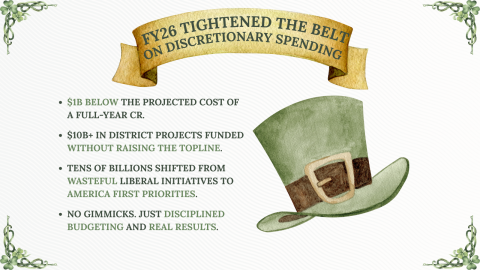
It’s time to buckle up – because real reform means confronting the true drivers of debt. Through the One Big Beautiful Bill Act, Republicans have begun addressing mandatory spending – the largest share of the federal budget. At the same time, House Appropriators have imposed discipline on discretionary accounts through annual appropriations bills.
No folklore. No lucky charms. Just math.
The House Appropriations Committee will continue exercising Article I’s constitutional power of the purse – investing responsibly in core discretionary operations, reducing waste, and reinforcing fiscal discipline.
Funding go Bragh. 🍀
###
