Committee Approves FY27 Labor, Health and Human Services, and Education Appropriations Act
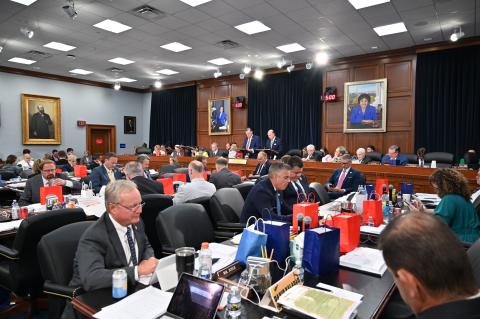
Washington, D.C. – Today, the House Appropriations Committee met to consider the Fiscal Year 2027 Labor, Health and Human Services, Education, and Related Agencies Appropriations Act. The measure was approved by the Committee with a vote of 34 to 28.
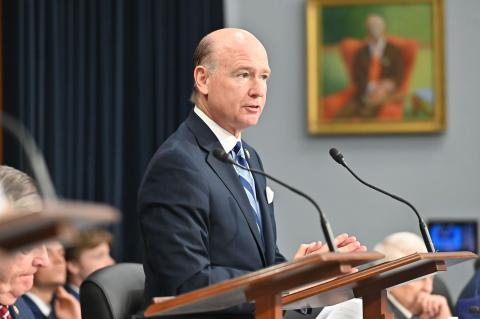
Labor, Health and Human Services, Education, and Related Agencies Subcommittee Chairman Robert Aderholt (R-AL) said, "The Fiscal Year 2027 Labor, HHS, and Education bill prioritizes the core mission of the Appropriations Committee by balancing the need for responsible fiscal stewardship, while maintaining key investments for the people and institutions that strengthen our nation. Following the President’s direction, we have taken a close look at every program funded in this bill and worked to codify the Trump Administration’s efforts to end senseless progressive overreach. This bill advances educational opportunities, restores accountability, and ensures taxpayer dollars are directed towards core functions like biomedical research, biodefense infrastructure, and rural health. I want to thank Chairman Cole and my colleagues for their hard work on these efforts, and I look forward to continuing this process, investing in our people, and preparing our nation for the challenges and opportunities ahead."
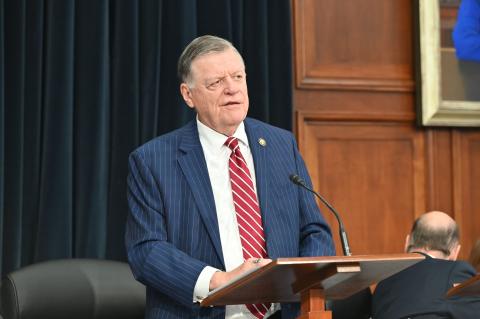
Chairman Tom Cole (R-OK) said, "America's strength has always been rooted in the talent, ingenuity, and determination of its people. The Fiscal Year 2027 Labor, Health and Human Services, Education, and Related Agencies bill focuses on enhancing that foundation. It supports the next generation of medical discoveries, strengthens public health preparedness, upholds educational opportunity, and equips Americans with the skills needed to thrive in a modern economy. It advances access to high-quality care for rural America and reinforces biodefense capabilities. And it includes investments for district-focused projects that support the needs of communities nationwide. At the same time, it restores accountability by streamlining duplicative programs, eliminating waste, and ensuring taxpayer dollars are spent effectively and responsibly. Chairman Aderholt has delivered a bill that recognizes a simple truth: our nation’s greatest resource is its people. By investing in their health, skills, and potential, this legislation helps ensure our country remains strong, competitive, and prepared for the future."
Subcommittee Chairman Aderholt's opening remarks are available here.
Chairman Cole's opening remarks are available here.
Labor, Health and Human Services, Education, and Related Agencies Appropriations Act
The Labor, Health and Human Services, Education, and Related Agencies Appropriations Act provides a total discretionary allocation of $189.3 billion, which is $5.6 billion (3%) below the Fiscal Year 2026 enacted level. This bill prioritizes funding for biomedical research, biodefense, and rural health – and returns education back to the States. The bill advances President Trump’s bold vision to right-size Washington’s bloated bureaucracy while reining in runaway spending on social programs.
Key Takeaways
Bolsters U.S. health, national security, and border protections by:
- Providing $48.8 billion in funding to support America’s continued leadership in biomedical research, countering China’s growing threat in basic science research.
- Strengthening America’s biodefense and countering global health security threats by providing a $105 million increase for the research, development, and procurement of medical countermeasures within the Administration for Strategic Preparedness and Response (ASPR).
- Prohibiting the purchase of supplies from China for the Strategic National Stockpile, which supports American manufacturers by expanding the domestic industrial base for these items.
- Supporting the nation’s domestic production of critical medicines by providing a $65 million increase for ASPR’s Center for Industrial Base Management and Supply Chain.
- Providing an increase of $184 million for the Centers for Disease Control and Prevention (CDC) programs focused on ensuring readiness, protecting public health, and responding to domestic and international emerging health threats.
- Maintaining funding for global health security and consolidating Global HIV/AIDS, TB, Measles, and other Vaccine Preventable Diseases funding lines into a new consolidated Global Emerging Infectious Diseases grant to give the CDC greater flexibility to rapidly address health threats before they destabilize partner countries or reach our borders.
Safeguards American taxpayer dollars and preserves core functions by:
- Increasing funding to combat health care fraud, waste, and abuse.
- Accepting President Trump’s reduction of unnecessary funding in the Refugee Resettlement and Unaccompanied Alien Children programs while preserving core functions such as sponsor vetting, interagency coordination, welfare checks, and reporting requirements for vulnerable children.
- Streamlining duplicative behavioral health programs, while increasing mental health and substance abuse block grant funding by $61 million.
- Providing increased funding for the 988 Lifeline, youth and young adult suicide prevention, and Medication-Assisted Treatment.
- Strengthening Tribal communities by supporting mental health and substance abuse treatment, elder care, and child and family services, while promoting accountability and self-sufficiency.
- Eliminating the duplicative Agency for Healthcare Research and Quality.
Supports the Trump Administration and mandate of the American people by:
- Eliminating the Office of Federal Contract Compliance Programs, consistent with President Trump's Executive Order 14173, “Ending Illegal Discrimination and Restoring Merit-Based Opportunity.”
- Prioritizing substance abuse treatment, prevention, and long-term recovery, including the use of opioid overdose reversal medications, while prohibiting taxpayer funds from going to harm-reduction activities that encourage continued use of illicit controlled substances.
- Maintaining the longstanding Hyde Amendment and ensuring no federal funding can be used for abortion on demand.
- Prohibiting funding for schools that support antisemitic conduct or discriminate against religious student groups.
- Maintaining the longstanding Dickey Amendment, which ensures that federal funds cannot be used to advocate or promote 2ⁿᵈ Amendment limitations.
- Providing an increase of $5 million for discretionary adoption programs to eliminate barriers to adoption, supporting permanency, and training child welfare professionals.
A summary of the bill is available here.
During the markup, Committee Republicans also stood with the America First agenda and rejected Democrat amendments that would have:
- Obstructed reforms to strengthen accountability and safeguard taxpayer dollars from waste, fraud, and abuse.
- Hindered efforts to reduce bureaucracy and improve the delivery of education programs.
- Sought to block responsible stewardship of Obamacare fees.
- Blocked efforts to reform the federal workforce.
- Increased spending of taxpayer dollars without offsets.
- Allowed taxpayer dollars to be used for elective abortions and removed pro-life conscience protections.
- Impeded efforts to sustain and strengthen federal student aid.
- Allowed for a new one-size-fits-all regulation on American workplaces.
- Funded illicit drug injection sites that fuel addiction and endanger communities.
- Limited the Trump Administration’s ability to administer grants.
Adopted Amendments
- Aderholt #1 (Manager’s Amendment) – Makes technical, bipartisan changes to the bill and report.
- The amendment was adopted by voice vote.
- Aderholt #2 (Republican En Bloc) – Makes technical changes, enhances surveillance of vector-borne diseases, reinforces support for research into psychotic disorders, and increases resources for 9/11 National Day of Service and Remembrance.
- The amendment was adopted by voice vote.
- Espaillat #1 – Directs study on family-based childcare centers.
- The amendment was adopted by voice vote.
- Perez #1 – Directs NIH to study pain management improvement strategies.
- The amendment was adopted by voice vote.
Bill text, before adoption of amendments, is available here.
Bill report, before adoption of amendments, is available here.
A table of included Community Project Funding requests is available here.
###
