Hegseth on the Hill: Appropriators Weigh FY27 Defense Request
Washington, D.C. – The Defense Subcommittee, chaired by Rep. Ken Calvert (R-CA), hosted Secretary of Defense Pete Hegseth, Chairman of the Joint Chiefs of Staff General Dan Caine, and Acting Undersecretary of Defense Jules Hurst for a hearing on the Department of Defense's FY27 budget request.
Appropriators are focused on providing our military with strong funding to protect Americans and support our military objectives around the world. The hearing reflected members' thoughtful commitment to achieving those objectives in a fiscally responsible manner in partnership with the Trump Administration.
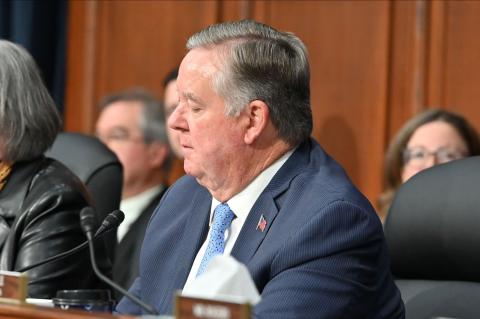
In his opening remarks, Defense Subcommittee Chairman Calvert said, "The world has grown more dangerous, more complex, and more interconnected in its risks. China is modernizing its military at a pace and scale that is alarming. Russia continues to wage a brutal war of aggression. And while Iran and their proxies have been dealt a severe blow, they remain a threat. Threats to Taiwan, Ukraine, NATO, Israel, our partners in the Gulf, and our allies across the globe are not abstract concerns. They are tests of American credibility and resolve. This Subcommittee believes deeply in the power of deterrence, but deterrence must be credible, and credibility must be funded... Mr. Secretary, both you and your Deputy must be commended for your commitment to reforming, modernizing, and prioritizing innovation at the Department. I have been here a long time, I have watched Administrations come and go, and I promise you that there are bureaucrats who are trying to wait you out. You must demand accountability at every level of your organization to ensure that the change you have demanded is taking place. Your call to move more quickly, inject competition, and allow new entrants to participate requires rigorous and persistent oversight. Otherwise, the forces in the Pentagon will simply snap back to the status quo, which does not serve our warfighters or the U.S. taxpayer."
Chairman Calvert's full remarks can be found here.
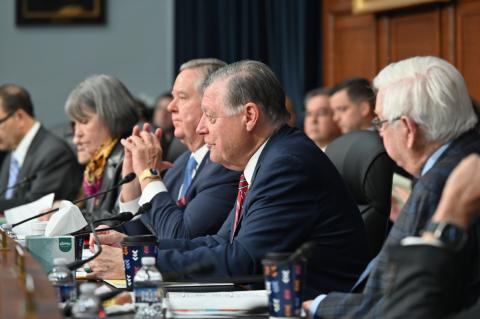
Chairman Tom Cole (R-OK) said, "Without hesitation, I recognize that a strong, agile, and effectively funded defense is not a mere priority – it is a necessity. The current threat environment facing the United States is as serious – and as layered – as anything I have witnessed in my time in Congress. The convergence of challenges from China, Russia, and Iran demands that we all work together with a level of seriousness and urgency that frankly has not always characterized our defense debates in recent years. On the budget, I firmly believe that adequate and stable defense funding is a national imperative. And yet, funding alone is not enough – every dollar must reflect clear priorities, operational effectiveness, and strategic urgency. This Subcommittee has a responsibility to ask hard questions about priorities, program performance, and whether the Department's acquisition processes are keeping pace with the speed at which our adversaries are moving... The bottom line is simple: we always hope for peace while maintaining the strength to defend it. We are committed to ensuring our military remains unmatched, our adversaries deterred, and the American people protected."
Chairman Cole's full remarks can be found here.
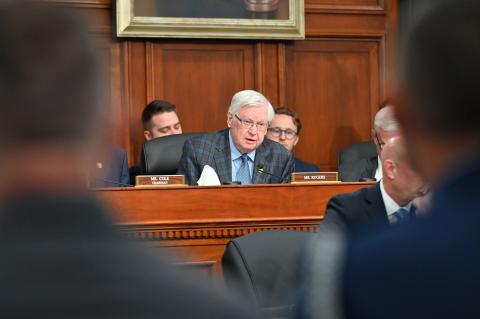
Rep. Hal Rogers (R-KY) said, "The 2026 National Defense Strategy makes clear that China is the pacing challenge, and this budget request puts real resources behind that nomenclature, including $11.7 billion for the Pacific Deterrence Initiative. My concern is that we're not just competing against China's military capability, we're competing against the speed at which China can build, replace, and influence."
General Caine assured Mr. Rogers that the Department of Defense and its production partners are working hard to close the gap and speed up our industrial base efforts.
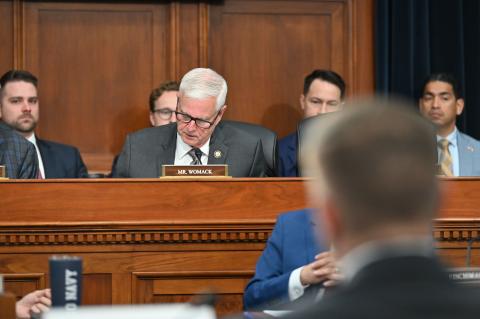
Rep. Steve Womack (R-AR) questioned General Caine on reimbursements for the National Guard. He said, "On the Army side, all of our states suffer from a lack of reimbursement for responding to the call of their communities. Between Fiscal 20 and Fiscal 24, over $71 million was paid by states to the Guard, but the Guard never saw that reimbursement. As you may know, any non-federal entity reimbursing a federal entity causes the funding to go to the Treasury, and NGB never sees that reimbursement. Our Guard is paying to respond to a disaster out of O&M funds, then having to pay more to maintain it. As the primary combat reserve for our active force, the Guard continues to play an outsized role in our nation's defense. In fact, General Nordhaus recently said that our National Guardsmen are fully integrated as part of the joint force in Operation Epic Fury. So here's my point. The Guard and Reserve are being asked to do more: Epic Fury, Midnight Hammer, border security missions, domestic deployments, and the many all-hazard responses across the 54. They are as much in the fight as the regular component. So what is the department's plan to ensure that the Guard and Reserve are recapitalized, maintained, and reimbursed at a pace consistent with their operational role in the national defense strategy?"
General Caine reasserted that the National Guard's role in our military today is much more as a strategic reserve than a tactical reserve, and despite the Guard's ability to stretch resources, the DoD continues to look for ways to improve those processes.
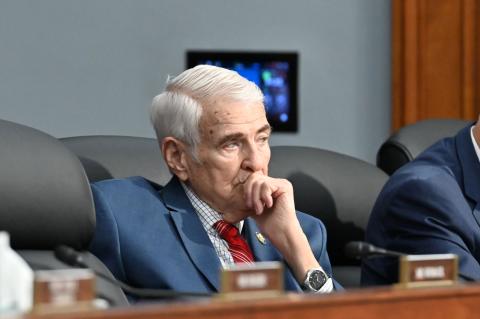
Rep. John Carter (R-TX) discussed proposed budget cuts that impact military operations in his district. He said, "I represent Fort Hood, the home of the First Air Cavalry division brigade, operating Apaches, Blackhawks, and Chinook helicopters. I'm concerned that the FY27 budget request does not support these programs... Will the department manage aviation modernization, and how will they do that without creating readiness problems and capability gaps in the future?"
Secretary Hegseth committed to reviewing these decisions to ensure our warfighters have the resources they need to continue protecting Americans while balancing the need to cut spending where appropriate.
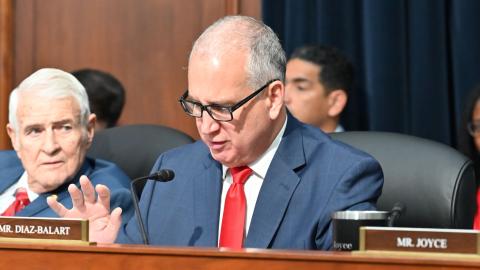
Committee Vice Chair Mario Díaz-Balart (R-FL) laid out the national security threat posed to the United States by a neighbor in our own hemisphere, Cuba. He said, "I'm very, very grateful that the Administration is finally really focused on the Western Hemisphere, and it's actually going to show that it's saving American lives... Let me talk about the one state sponsor of terror in the Western Hemisphere, which is the Cuban regime. Are you aware that they harbor terrorists and U.S. fugitives from U.S. law? Is it true that the Cuban regime shot down two American airplanes in international airspace, murdering Americans? Is it true that Russian spy ships and warships, including the nuclear sub Kazan, have repeatedly used Cuban ports? Is it true that the site of the Russian complex in Lourdes has once again become a hub for Russian intelligence within Cuba? Are you aware that... according to Ukrainian intelligence, there are thousands of Cubans fighting for Russia in Ukraine? Do you believe that the Cuban regime poses a national security threat to the United States?"
Secretary Hegseth affirmed that all these things are true and agreed with Mr. Díaz-Balart that the Cuban regime poses a dire threat to our national security.
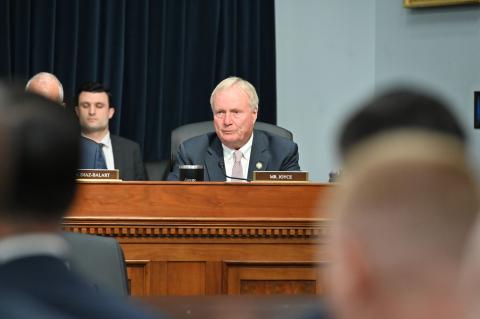
Rep. Dave Joyce (R-OH) said, "I just wanted to touch on another angle that we're getting attacked, unfortunately, and that's cyber threats from adversaries like China, Russia, Iran, and criminal organizations, which continue to grow. The department's ability to defend critical networks and support their military operations depends on a strong and ready cyber workforce across all the services. At the same time, unfortunately, you're competing with the private sector, which can make recruiting and retaining qualified cyber personnel challenging. Can you give us an assessment of where the department's cyber workforce stands today and what investments Congress can make to help you make that better?"
Secretary Hegseth shared that their budget request is for $20 billion to cover cyber offense and defense, and highlighted strategic changes the Trump Administration is making to integrate cyber as a warfighting domain.
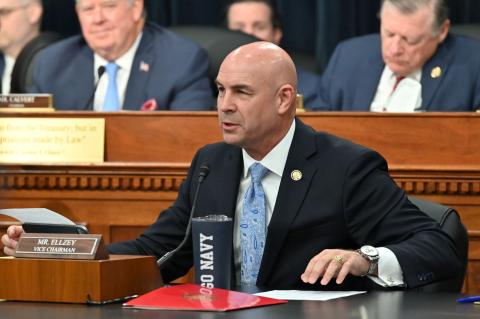
Defense Subcommittee Vice Chair Jake Ellzey (R-TX) said, "General, you addressed Carl von Clausewitz, so I'll use Sun Tzu as a counter: Even the finest sword plunged into salt water will eventually rust, and we deployed the USS Ford in June 24th of 2025, it's going on 11 months at sea... This is going to harm a lot of families. And, as we realize that every conflict we've been in in the last year has included the Ford, and it's been essential to our operations, it also points out the need for carriers. And I don't think 11 is enough, but I also recognize that down range, that's going to affect the availability and the readiness of our force going forward. So along with that, the capabilities that a sixth-generation fighter on the carrier are so important, as we've already seen, we've got the F-47, we're going to downselect the F/A-XX later this summer. General Caine, can you address why having both of those is so important?"
General Caine reiterated gratitude for the USS Ford and the role they've played in multiple conflicts this year, and responded that civilian leadership at the Pentagon is considering a range of options to ensure full preparedness within the fleet.
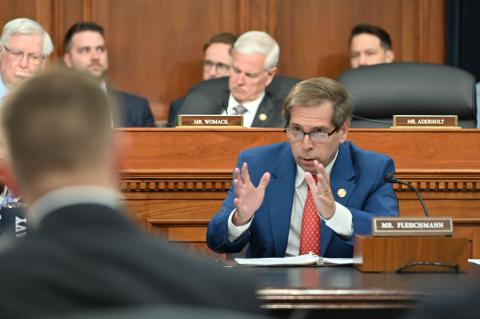
Rep. Chuck Fleischmann (R-TN), who chairs the Energy and Water Subcommittee, said, "I'm deeply involved in the recapitalization and modernization of our nation's nuclear deterrent, as we are recapitalizing the entire strategic nuclear arsenal. I remain concerned about the lack of options lower on the escalation ladder available to the President. In-theater, non-strategic nuclear weapons have remained essential to the credibility of our extended deterrent commitment to NATO... General Caine and Secretary Hegseth, what is your assessment of our non-strategic nuclear capability gaps in the Indo-Pacific and elsewhere? What additional tactical nuclear capabilities beyond SLCM-N should we consider that would be most useful for reassuring allies, deterring our adversaries, and providing combatant commands and useful options in the worst-case event of a conflict?"
Secretary Hegseth said there's a lot of sensitivity in the topic, especially in an unclassified setting, but that the Pentagon is looking at all options.
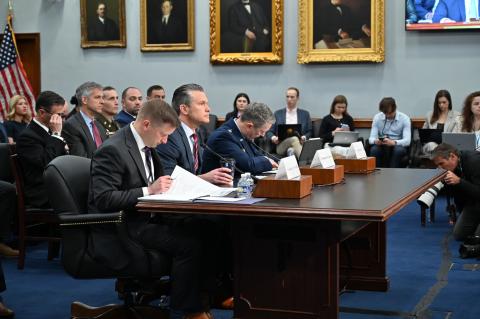
The Department of Defense continues to work in partnership with Congress to improve military readiness, modernize equipment, and strengthen our warfighting capabilities to ensure the United States has the most lethal fighting force in the world. Appropriators are a critical piece of this process, with the Defense Appropriations bill covering roughly half of all discretionary spending.
With increased threats on the global stage from more bureaucratically agile adversaries like China and Russia, as well as heightened demands on our fighting forces in response to aggression from Iran, defense funding is never on autopilot. Every project is evaluated, every line item scrutinized. Members of the Defense Subcommittee continue to work responsibly on the FY27 funding process to ensure our nation is protected and prepared for any threat.
###
